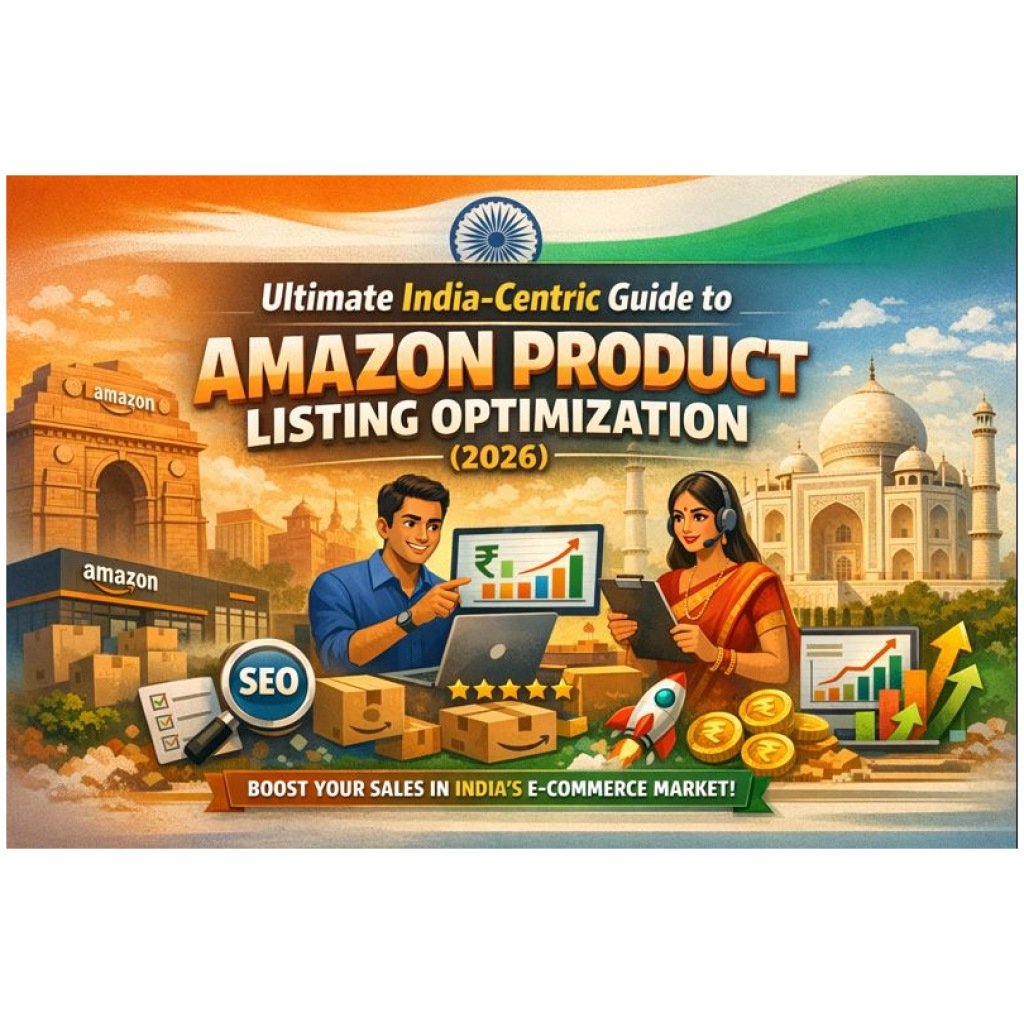
Optimizing your Amazon.in product listing isn’t just about filling fields — it’s a data‑driven process that improves visibility in Amazon’s search results (driven by the A10 algorithm), boosts conversion with Indian customer preferences, and reduces returns and COD‑related issues that are prevalent in this market. [source]
🧠 1. Understand How Amazon India Search Works (A10 Algorithm)
Amazon’s A10 search engine prioritizes listings not simply based on keywords, but on relevance, sales history, conversion performance, and customer satisfaction signals — factors that Amazon’s algorithm interprets before ranking your listing. [source]
Key Ranking Signals
- Keyword Relevance: How well your title, bullets, backend keywords, and description match customer search intent. [source]
- Historical Sales & Conversion Rates: Listings with consistent sales perform better. [source]
- Click‑Through Rate (CTR): Products that get clicked more often from search pages rise in ranking. [source]
- Customer Behavior: Time spent on product page, Q&A engagement, and review helpfulness affect visibility. [source]
🔍 2. Deep Keyword Research — India Style
Keyword research is the cornerstone of Amazon SEO — but for Indian audiences you must go beyond standard English keywords. [source]
A. Mix English & Local Search Terms
Indian shoppers often mix English with Hindi or regional search terms: e.g.,
- “Mobile cover” and “मोबाइल का कवर”
- “LED bulb” and “लॉन्ग लास्टिंग बल्ब”
This mix captures local buying language — and you should include both in your listings when appropriate. [source]
B. Use Multiple Tools for Keyword Discovery
Leverage Amazon’s:
- Autocomplete suggestions
- Amazon Brand Analytics (for India)
- Search Query Performance data
Plus third‑party tools like Helium 10, Jungle Scout, Sonar, etc., to uncover long‑tail, high‑intent keywords. [source]
C. Keyword Placement Strategy
Target keywords in the following fields (in this order of priority):
- Product Title
- Bullet Points
- Product Description
- Backend Search Terms (hidden keywords)
- A+ Content ALT text and headers (where allowed)
This layered approach ensures maximum discoverability. [source]
🏷️ 3. Crafting an Optimized Title for Indian Buyers
Your product title is one of the strongest signals for visibility and CTR — but Indian sellers often make mistakes like keyword stuffing or too few relevant terms. [source]
Best Practices
- Start with Your Brand Name (if known)
- Include Primary Keyword + Key Attributes
- Add Variant Info (size/color/weight etc.)
- Keep it descriptive but concise
- Avoid caps lock, promotional language, or unsupported claims
Perfect format: Brand + Primary Keyword + Key Features + Variant Details
Example: “XYZ Women’s Cotton Kurti with Palazzo – Festive & Office Wear – Breathable Fabric” [source]
📸 4. Visual Optimization — Local Standards & Compliance
Images do more than show your product — they influence clicks, conversions, and even listing compliance on Amazon.in. [source]
Image Checklist
- Hero Image: White background, product fills ~85% of frame, no text or logos. [source]
- 6–9 Supporting Images:
- Product from multiple angles
- Lifestyle shots (product in real use)
- Infographics highlighting dimensions, features, benefits
- Compliance: Follow Amazon India category‑specific image rules to avoid suppression. [source]
For consumables or regulated categories (like foods), include packaging with mandated details (e.g., FSSAI info). [source]
✍️ 5. Bullet Points & Description That Convert
Bullet points are scanned rapidly by buyers — in India, mobile usage is high, so clarity and brevity matter. Bullets should:
- Highlight USP (unique selling proposition)
- Include primary and secondary keywords
- Clarify value to Indian customers (e.g., durability for daily use, COD friendly benefits) [source]
Product Description goes deeper:
- Tell your brand story
- Explain how the product solves common problems
- Provide contextual use cases (e.g., gifting, work, festivals in India)
This section impacts conversion more than ranking but still plays an indirect SEO role. [source]
🛠️ 6. Backend Keywords — The Hidden Power
Backend keywords are not visible to customers but vastly improve search coverage. Include:
- Misspellings
- Synonyms
- Regional terms
- Long‑tail phrases (like “best gift for Diwali for mom”)
Be compliant — avoid repetition and keep terms relevant. [source]
⭐ 7. A+ Content & Enhanced Brand Content
For brand‑registered sellers, Amazon India allows A+ Content which can significantly increase sales by:
- Providing richer storytelling
- Adding comparison charts, lifestyle visuals
- Highlighting USPs more vividly
While these elements don’t directly affect search indexing, they boost conversion and reduce bounce rates — a ranking factor indirectly. [source]
💰 8. Pricing & Competitive Positioning
Price affects both conversion and Amazon SEO — overpriced products convert less, which signals poor relevance. Competitive pricing ensures:
- Better conversions
- Better Buy Box eligibility
- Higher listing rank over time
Study competitors regularly and adjust pricing strategically without compromising profitability. [source]
🧪 9. Measure, test & refine – The Optimization Loop
Continuous analysis is crucial. Use Amazon’s analytics tools to track:
- Search term performance
- CTR and conversion rates
- Impressions and sessions
- Buy Box % and sales velocity
Run A/B experiments (available in Manage Your Experiments) on titles, images, bullet points, and A+ Content to see what resonates best with Indian customers. [source]
🧩 10. India‑Specific Selling Nuances
A. Cash On Delivery (COD) & RTO Rates
India has high COD usage — this increases RTO (returns to origin) if product expectations aren’t met. Optimize your photos, bullet points, and key features to set correct expectations, reducing returns and strengthening search rankings. [source]
B. Vernacular Search Behaviour
Incorporating popular local terms (Hindi/English mixed) expands reach and captures searches that global SEO guides often miss. [source]
C. Festival & Seasonal Demand
Adjust listings for peak sales seasons (Diwali, Navratri, Eid, Christmas) — refresh images and bullets to align with these periods for higher CTR and relevance.
📊 Summary: India‑Focused Optimization Checklist
- Title: Brand + primary keywords + product attributes
- Images: Compliant + lifestyle + infographics
- Bullets: Conversion‑focused + SEO optimized
- Description: Detail + contextual relevance
- Backend Keywords: regional terms + long‑tails
- A+ Content: Brand experience + trust signals
- Pricing: Competitive & data‑informed
- Testing: Continuous A/B experiments
- Seasonal Refresh: Festivals & peak buying periods
If you’d like, I can convert this into a step‑by‑step SOP, checklist PDF, or India specific templates for titles, bullets, and backend keywords that you can use directly in Seller Central. Just tell me what format you prefer!